
What is missing?
Your plants need proper food, not just water. Because potted plants live in small containers, the soil quickly loses its nutrients. Using the best plant fertilizer turns a weak plant into a fresh, green beauty.
Let’s look at how to choose the right plant food easily without harming your plants.
Why Indoor Plants Need Extra Care
Outdoors, plants get natural nutrients from worms and rich soil. But indoor potted plants live in a tiny space. Every time you water your plant, important minerals wash out through the holes at the bottom of the pot.
Over time, the soil becomes empty. Water and sunlight alone are not enough. Using a good fertilizer for plants replaces those lost nutrients and keeps the stems strong and leaves bright.
What Do the Numbers (NPK) on Fertilizer Mean?
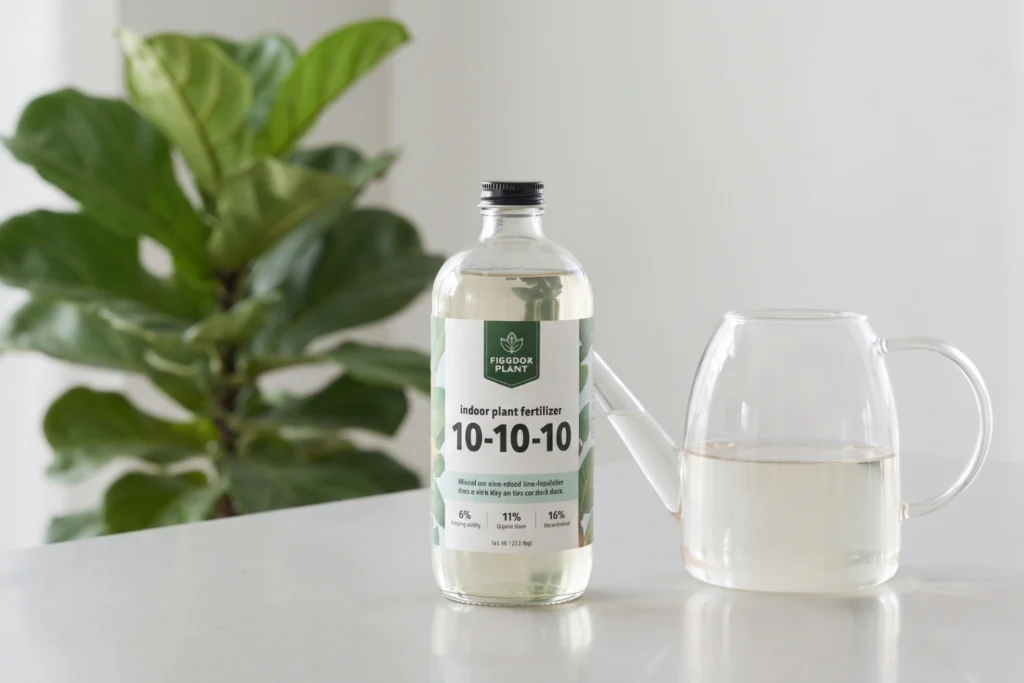
When you look at a bottle of plant food, you will see three numbers separated by dashes (like 10-10-10). Don’t worry, it is very simple. These numbers show the NPK ratio, which means three important nutrients:
- N – Nitrogen: Helps grow bright, green leaves.
- P – Phosphorus: Helps build strong roots and pretty flowers.
- K – Potassium: Keeps the plant healthy and fights diseases.
Matching Fertilizer to Your Plants
Not all plants need the same food. Let’s see what works best for different types of plants:
1. For Money Plants and Monsteras
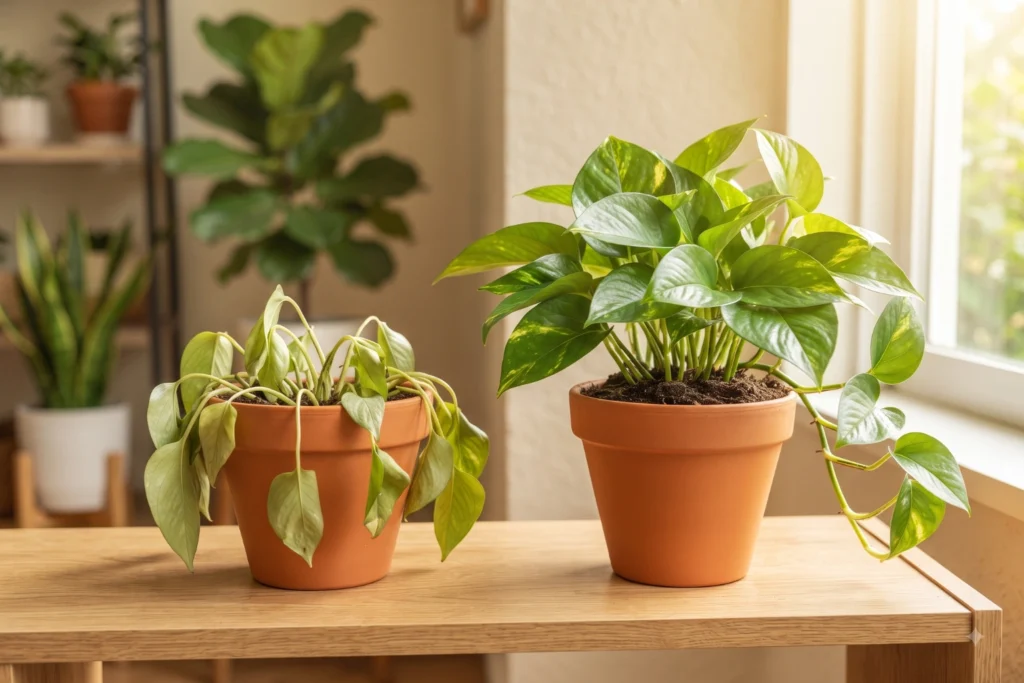
If you want big, glossy green leaves and long vines, choose a liquid fertilizer with high nitrogen. The best fertilizer for money plant care helps vines grow fast without burning the stems.
2. For Peace Lilies and Flowering Plants
If your plant gives flowers, choose a balanced formula that supports both leaves and blooms. Using a special peace lily fertilizer stops the leaf tips from turning brown.
3. For Succulents and Cacti
Do not use heavy plant food for succulents. They store water and nutrients on their own. They only need a very light, special cactus food during the summer and spring seasons.
Liquid vs. Granular vs. Organic Plant Food
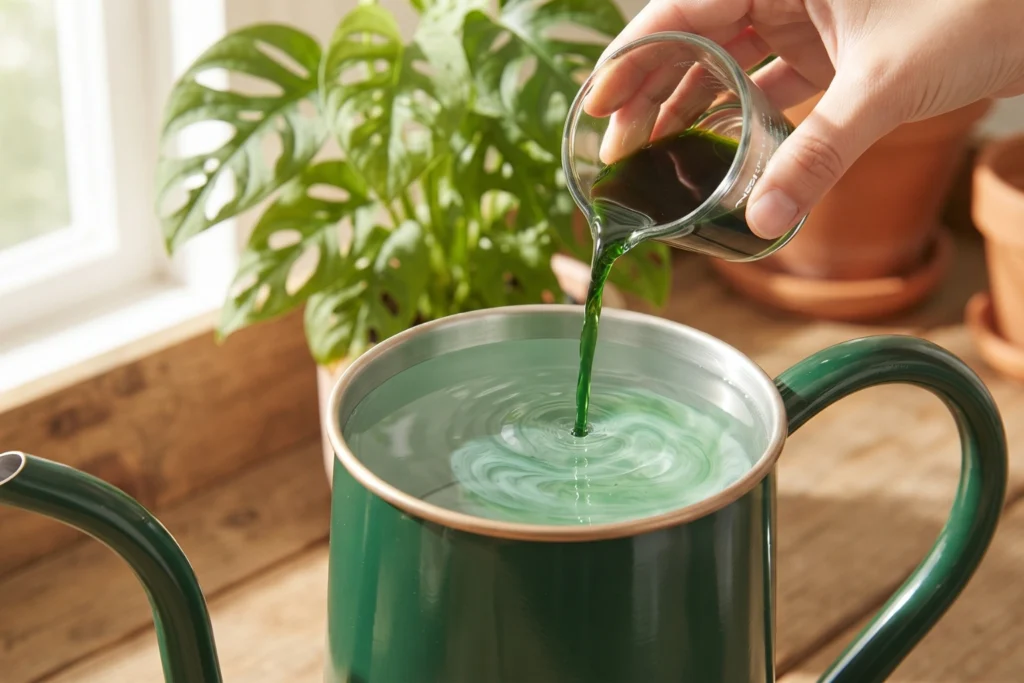
Here are the main types of plant food you can buy:
- Liquid Plant Food: The best choice for indoor plants. You just mix a few drops in your watering can. It absorbs quickly and is very easy to use.
- Slow-Release Pellets: Good if you often forget to feed your plants. These tiny pellets break down slowly over a few months every time you water.
- Organic Options (like Vermicompost): A natural, safe choice for your home. Mixing a little liquid organic vermicompost gives your plants a chemical-free boost.
Simple Steps to Feed Your Indoor Plants Safely
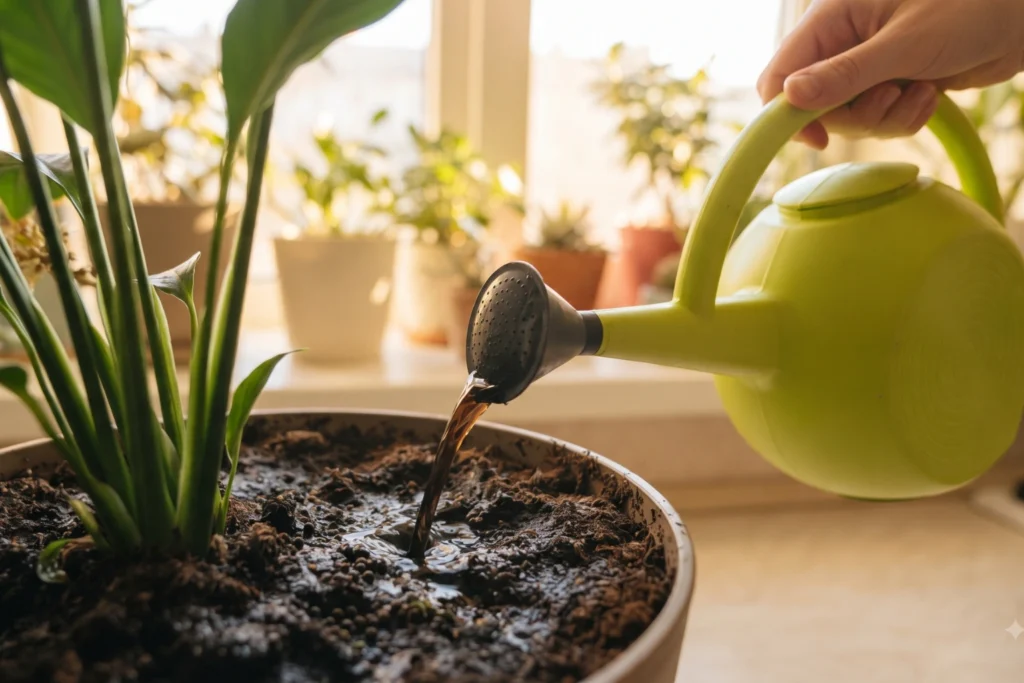
To avoid burning your plant’s roots, follow these simple rules:
- Always Dilute It: Mix the liquid fertilizer with extra water to make it half-strength. Plants prefer light food over a heavy dose.
- Never Feed Dry Soil: Always water your plant normally a day before you add fertilizer. Pouring plant food onto completely dry soil can burn the roots.
- Stop in Winter: Plants rest during autumn and winter. Stop giving them fertilizer from October to February, and start again in the spring.
Marigold Plant Care
Healthy soil means happy marigolds.
- N – Nitrogen: Helps grow bright, green leaves.
- P – Phosphorus: Helps build strong roots and pretty flowers.
- K – Potassium: Keeps the plant healthy and fights diseases.
Balanced water-soluble fertilizers (such as NPK 10-10-10 or 20-20-20) or gentle organic options like liquid seaweed and worm casting extracts are generally considered best for indoor plants because they provide essential nutrients without burning the roots.
A balanced, water-soluble liquid fertilizer with an equal ratio of nitrogen, phosphorus, and potassium (like a 10-10-10 formula) serves as the best all-purpose choice, supporting overall leaf growth, root strength, and vitality for most indoor varieties.
It depends on your plant’s needs. NPK provides a balanced mix of three major nutrients for overall growth, whereas DAP (Diammonium Phosphate) is rich in phosphorus and nitrogen, making it ideal for boosting strong root development and early plant growth.
Fertilizers containing a balanced blend of nitrogen (for lush green growth), phosphorus (for strong roots and blooms), and potassium (for overall plant immunity) help plants grow faster and healthier, especially when applied in liquid or water-soluble forms.
NPK is generally better for well-rounded, long-term plant health because it supplies all three essential macronutrients. Urea is primarily a high-nitrogen fertilizer meant for rapid leaf greening, but overuse can burn the plant or imbalance the soil.