
Marigold Plant Care: How to Grow Healthy and Blooming Marigolds

Marigold Plant Care Tips for Healthy and Bright Blooms

Table of Contents

Marigold Plant Care : How to Grow Healthy and Blooming Marigolds

There’s something magical about marigolds.
Their bright golden blooms seem to smile back at the sun, filling every corner of your garden with warmth and joy.

If you’ve ever watched a marigold open up in the morning light, you know — it’s not just a flower; it’s a little burst of happiness.

But to keep that magic alive, your plants need love, attention, and the right care.
This guide will walk you through 10 simple marigold plant care tips — so you can enjoy endless blooms and a garden that feels alive every single day.

1. Know Your Marigold Type

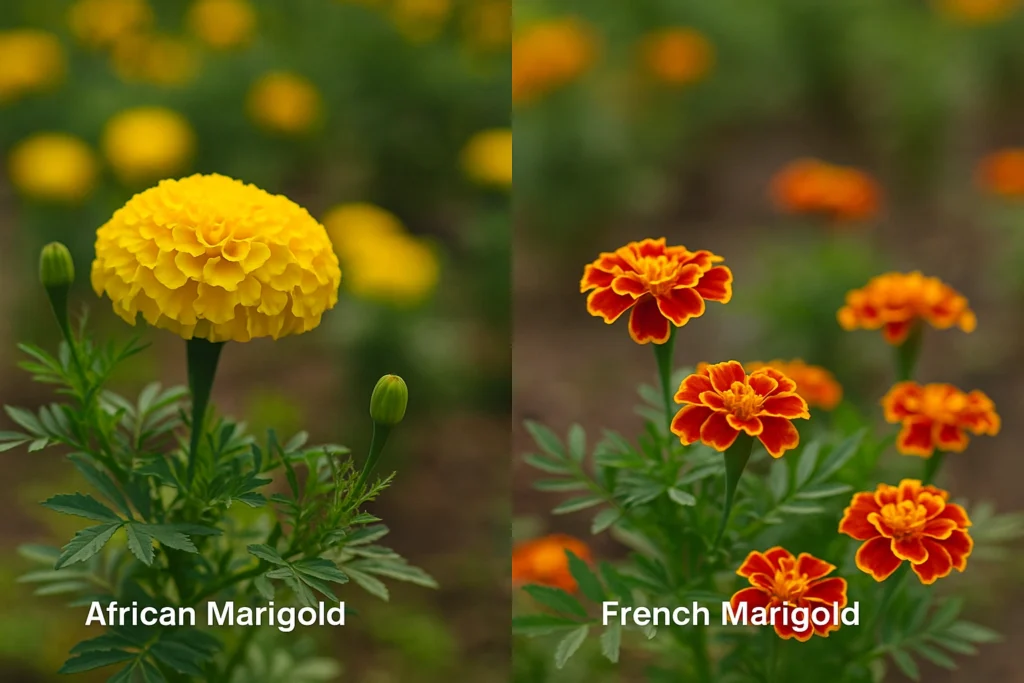
African and French marigolds side by side showing size, color, and growth differences

Before you start, understand the kind of marigold you have.
There are mainly two types you’ll find in home gardens:

  • African Marigolds (Tagetes erecta): Tall, bold, and perfect for outdoor beds.
  • French Marigolds (Tagetes patula): Compact, colorful, and ideal for pots or borders.

Knowing your type helps you plan how to water, prune, and space your plants better.

2. Give Them Full Sunlight

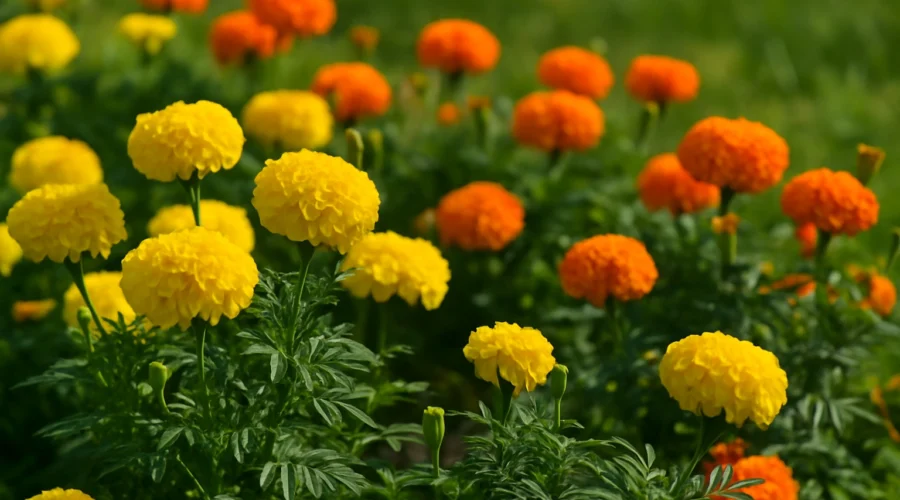
Full garden view of marigolds in full bloom under bright sunlight

Marigolds love the sun.
For the healthiest growth and continuous blooms, ensure your plant gets 6–8 hours of direct sunlight daily.

If you are growing marigolds in pots, place them on a balcony, terrace, or sunny window.
Without enough sunlight, they may grow tall but produce fewer flowers.

3. Choose the Right Soil Mix

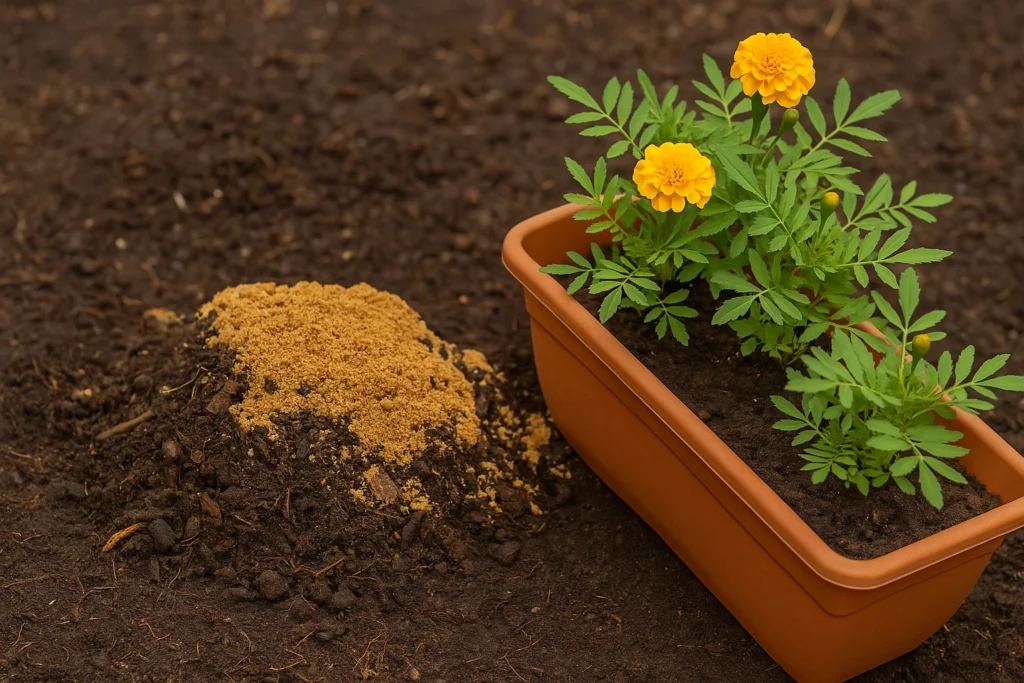
Loose well-draining soil mix for marigold plants in pots

Healthy soil means happy marigolds.
Use well-draining soil — marigolds don’t like wet feet!

Ideal mix for marigolds in pots:

2 parts garden soil + 1 part compost + 1 part cocopeat or sand

Keep the soil slightly moist but never soggy.
pH should be between 6.0–7.0 (neutral to slightly acidic).

Pro Tip: Add a handful of compost every 2–3 weeks to keep flowers coming.

4. Watering Schedule — Consistency is Key

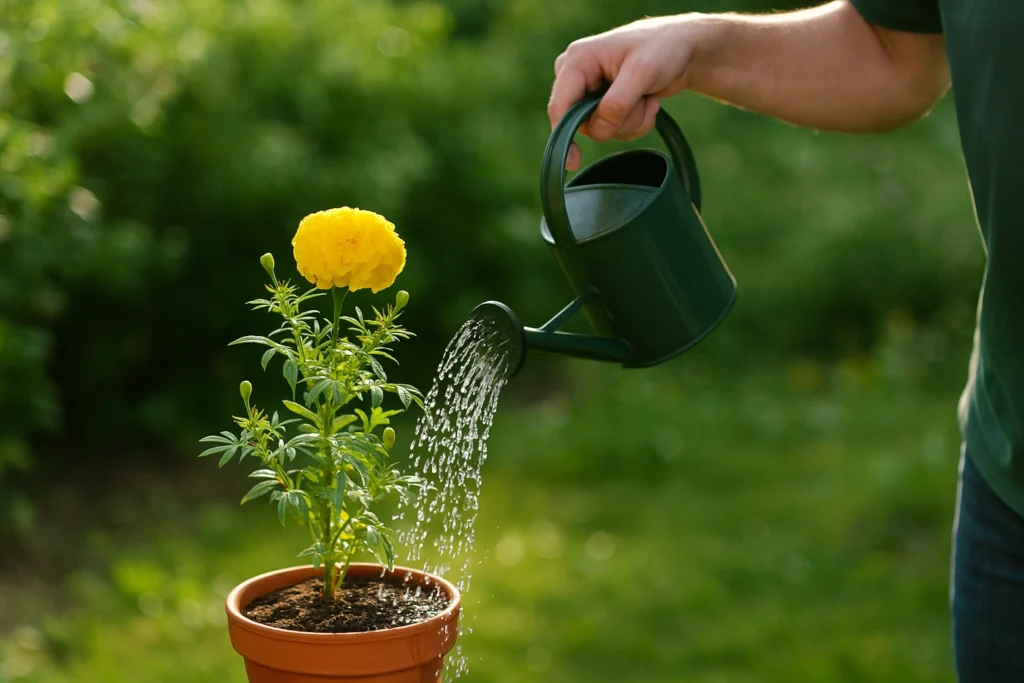
Gardener watering marigold plant early in the morning for healthy blooms

Marigolds are drought-tolerant, but they bloom best with consistent watering.

  • Water when the top 1 inch of soil feels dry.
  • In hot months, water daily or every alternate day.
  • Avoid wetting the leaves — it causes fungal infections.
  • Always water early in the morning.

For potted marigolds, make sure your pot has drainage holes.

5. Feed with Love (and the Right Fertilizer)

Marigolds don’t need too much fertilizer, but a little nutrition keeps blooms healthy.

  • Use organic compost or vermicompost every 15–20 days.
  • Once a month, apply a balanced NPK fertilizer (10-10-10) in small quantity.
  • Avoid too much nitrogen — it increases leaves, not flowers.
  • For extra flowering, add bone meal or banana peel powder once a month.

6. Deadhead and Prune Regularly

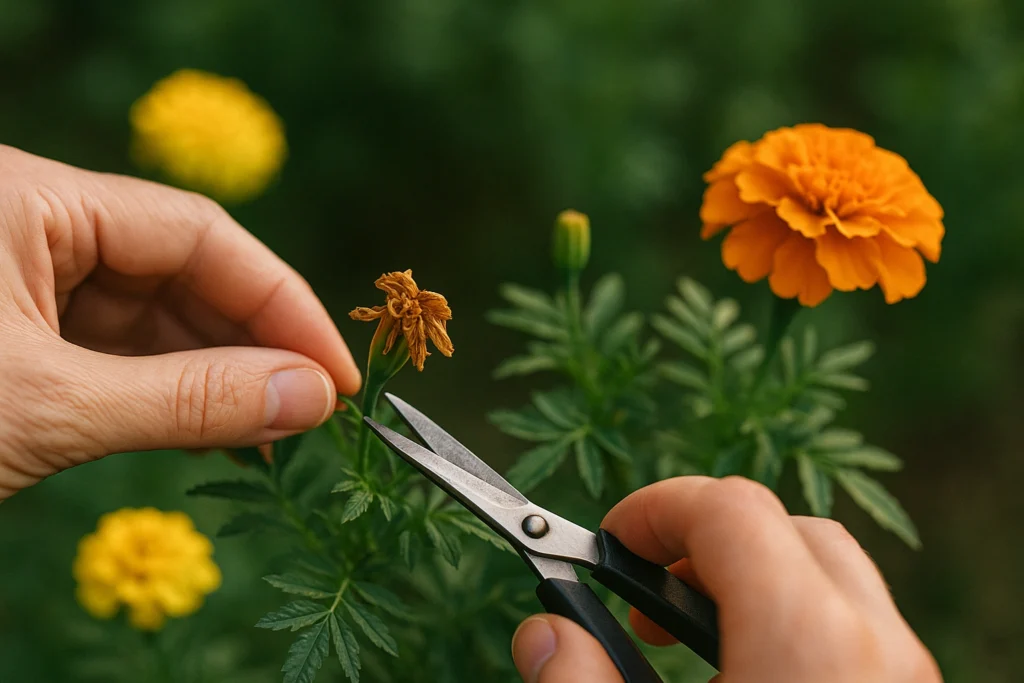
Gardener cutting a dried marigold flower to encourage new blooms

Deadheading means removing faded or dried flowers — and it’s the secret to continuous blooms!

Steps:

  • Use clean scissors to snip off old flowers.
  • Trim long, weak stems to encourage bushy growth.
  • Regular pruning gives you a fuller, healthier plant.

The more you cut, the more they bloom!

7. Protect from Pests and Diseases

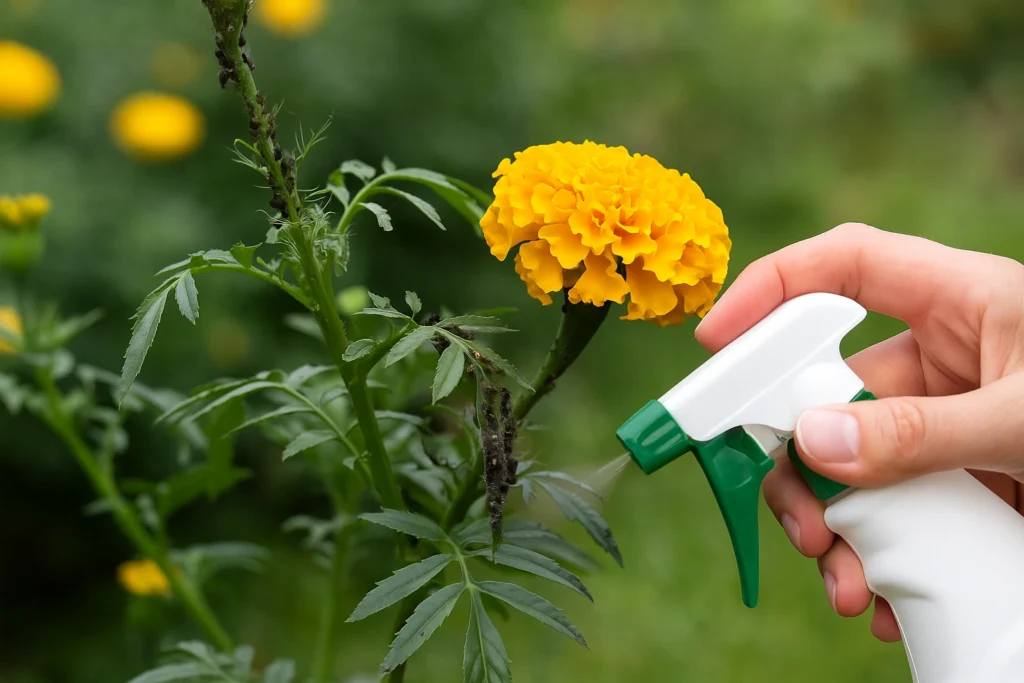
Hand spraying neem oil on marigold plant to control aphids and pests

Marigolds are known to repel pests, but sometimes they too need protection.

Common issues:

  • Aphids / Spider mites: Tiny insects on leaves. → Spray neem oil every 7 days.
  • Powdery mildew: White layer on leaves. → Avoid overwatering and improve airflow.
  • No flowers: Check sunlight and fertilizer levels — too much nitrogen causes this.

Keep leaves clean and dry, and your plant will stay strong.

8. Special Care for Marigolds in Pots

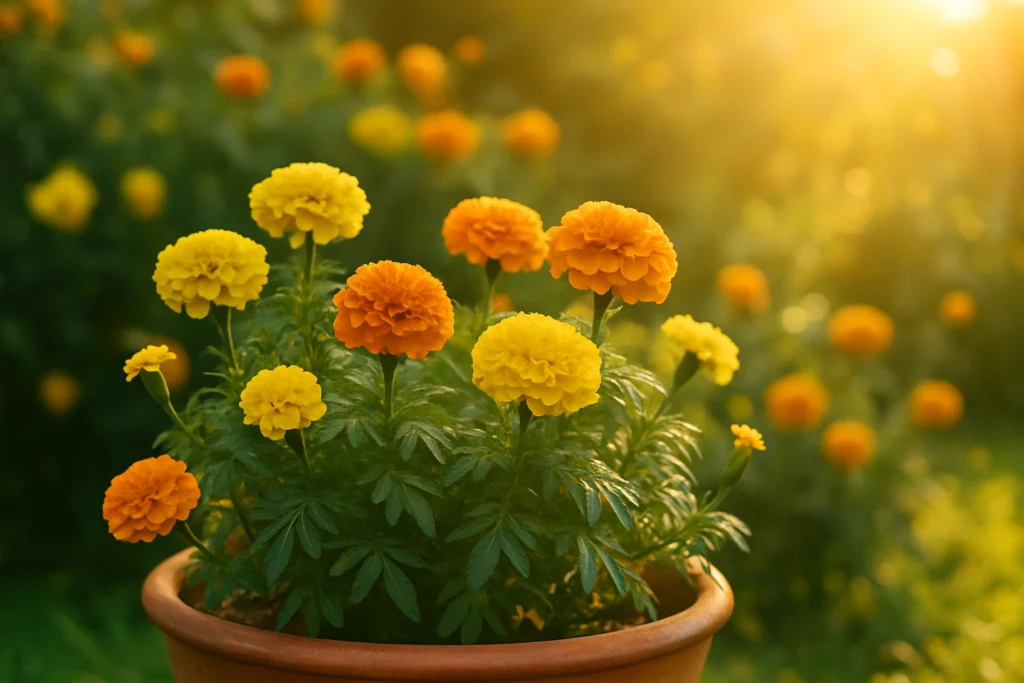
Growing marigolds in pots is perfect for small spaces — balcony, terrace, or window gardens.

Tips:

  • Choose 8–10 inch pots with drainage holes.
  • Use light, airy, and well-draining soil mix.
  • Place pots in full sun.
  • Water regularly but don’t overwater.
  • Fertilize lightly every 15 days.

Rotate pots occasionally so all sides get sunlight.

9. Seasonal Care and Flowering Time

Marigolds bloom best in warm weather.

In India: They thrive from October to March (winter season) and can also bloom during summer with care.

Start seeds indoors 4–6 weeks before the last frost.
When seedlings are strong, transplant them outdoors or into pots.

Keep deadheading to extend the blooming season!

10. Bonus Tips for Endless Blooms

Small habits make big differences:

  • Pinch off early buds to encourage more branches.
  • Use compost tea once a month for organic nutrition.
  • Keep them sheltered during heavy rain.
  • Don’t move pots too often — marigolds like stability.
  • Harvest seeds from dry flowers for next season!

Your marigolds will thank you with waves of colorful blooms.

Conclusion

Marigolds remind us that even the simplest care can create the brightest joy. 
With a little sunlight, soft watering, and patience, they bloom like tiny suns in your garden.
Each flower feels like a reward for your love and time, bringing peace and beauty to your days.
Keep nurturing them gently — and with proper marigold plant care, your garden will never stop smiling with golden happiness.

Yes, marigolds can grow in partial shade, but they won’t bloom as abundantly. For best results, give them at least 4–6 hours of direct sunlight daily. In full shade, plants may grow tall and weak with fewer flowers.

Yellow leaves are often caused by overwatering, poor drainage, or nutrient deficiency. Ensure the soil is well-drained, water only when the top soil is dry, and add compost or liquid fertilizer once every 2 weeks.

Deadhead spent flowers regularly, provide full sunlight, and feed the plant with a phosphorus-rich fertilizer. Avoid too much nitrogen — it encourages leaves instead of flowers.

Although marigolds repel many pests, they can still be affected by aphids, spider mites, and whiteflies. Spraying neem oil or insecticidal soap once a week helps keep them safe and healthy.

Absolutely! Once the blooms dry, collect the seeds from the center of the flower head. Let them dry completely and store them in a cool place. You can sow these seeds directly in soil during the next season.

NEWSLETTER SUBSCRIBE

LATEST POSTS